
An Esophageal Dilation is considered by your child’s doctor when a persistent narrowing in the esophagus prevents the safe and comfortable movement of food from your child’s mouth down to their stomach. For example, in Eosinophilic Esophagitis (EoE), an abnormal presence of white blood cells called eosinophils may cause chronic (long-standing) inflammation in the esophagus. This inflammation may cause the esophagus to become tight or narrow over time.
A doctor might evaluate your child for this procedure if they experience:
- Difficulty swallowing or feeling like food is getting stuck
- Food actually getting stuck in the food pipe (requiring urgent removal)
- Frequent vomiting or belly pain
- Trouble eating or poor weight gain
Doctors confirm the food pipe is too narrow using one of two tests:
- An Esophagram: A specialized X-ray that shows the outline of the food pipe as your child swallows.
- An Endoscopy: A procedure where the doctor uses a small camera to look directly inside the food pipe.
A narrow food pipe can increase the risk of food getting stuck and can even prevent the doctor from safely passing their camera to complete a full medical exam.
Your gastroenterologist will discuss when an Esophageal Dilation may be right for your child, including the risks and benefits of the procedure. There are many important factors to consider when deciding on this procedure including the size of the narrowing, the number of narrowed areas, and how your child has responded to any therapies tried in the past.
Important to Know: Stretching the food pipe opens the passage, but it does not cure or prevent underlying swelling (inflammation). Your child will still need ongoing treatment—such as me
dication or dietary changes—to keep the swelling under control.
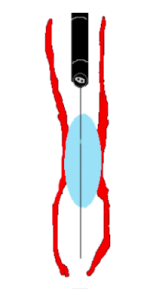
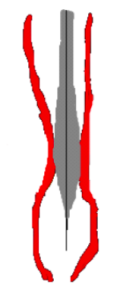
An Esophageal Dilation is often performed alongside an endoscopy – a procedure that uses a long, flexible camera to evaluate parts of the GI tract. There are typically two types of tools used to help widen the esophagus: a balloon dilator or mechanical dilator. These tools are described below. Selection of the best method for your child requires careful discussion with your gastroenterologist or surgeon.
| Balloon Dilation | Mechanical Dilation |
|
|
 |
 |