A trusted resource for children, families, and providers for learning and management of pediatric digestive disorders.

Esophageal Dilation

What is an Esophageal Dilation?

To best understand the term “Esophageal Dilation”, it helps to break it down into two parts: : “Esophagus” and “Dilation”

  • Esophagus (food pipe): The tube that connects the mouth to the stomach. It actively moves food down to your stomach with a coordinated squeeze
  • Dilation: A medical procedure that stretched or widens a narrowed area of intestine

Putting it together, esophageal dilation is a procedure where a doctor (usually a gastroenterologist or surgeon) gently stretches open a narrow section of your food pipe so food and drink can pass through easily. 

There are a number of conditions for which an Esophageal Dilation may be appropriate to address a narrowed esophagus. These include congenital problems your child may have been born with, injuries to the esophagus, or narrowing related to inflammation.

When is Esophageal Dilation Considered?

Diagram of a narrow esophagus (food pipe)

An Esophageal Dilation is considered by your child’s doctor when a persistent narrowing in the esophagus prevents the safe and comfortable movement of food from your child’s mouth down to their stomach. For example, in Eosinophilic Esophagitis (EoE), an abnormal presence of white blood cells called eosinophils may cause chronic (long-standing) inflammation in the esophagus. This inflammation may cause the esophagus to become tight or narrow over time.

A doctor might evaluate your child for this procedure if they experience:

  • Difficulty swallowing or feeling like food is getting stuck
  • Food actually getting stuck in the food pipe (requiring urgent removal)
  • Frequent vomiting or belly pain
  • Trouble eating or poor weight gain

Doctors confirm the food pipe is too narrow using one of two tests:

  1. An Esophagram: A specialized X-ray that shows the outline of the food pipe as your child swallows.
  2. An Endoscopy: A procedure where the doctor uses a small camera to look directly inside the food pipe.

A narrow food pipe can increase the risk of food getting stuck and can even prevent the doctor from safely passing their camera to complete a full medical exam.


Your gastroenterologist will discuss when an Esophageal Dilation may be right for your child, including the risks and benefits of the procedure. There are many important factors to consider when deciding on this procedure including the size of the narrowing, the number of narrowed areas, and how your child has responded to any therapies tried in the past.

Important to Know: Stretching the food pipe opens the passage, but it does not cure or prevent underlying swelling (inflammation). Your child will still need ongoing treatment—such as me

dication or dietary changes—to keep the swelling under control.

How is an Esophageal Dilation Done?

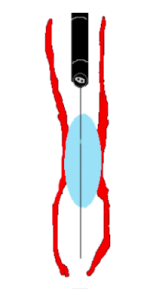
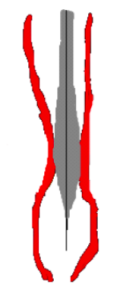
An Esophageal Dilation is often performed alongside an endoscopy – a procedure that uses a long, flexible camera to evaluate parts of the GI tract. There are typically two types of tools used to help widen the esophagus: a balloon dilator or mechanical dilator. These tools are described below. Selection of the best method for your child requires careful discussion with your gastroenterologist or surgeon.

Balloon Dilation Mechanical Dilation
  • The balloon dilator is passed carefully through the endoscope carefully by your doctor with the esophagus in view
  • The balloon is deflated as it passes into the narrow area of the esophagus
  • Fluid is used to gradually fill the balloon, applying gentle pressure to the wall of the esophagus in order to help open up the narrowed area
  • These tools (often named Savary or Maloney dilators) have a narrow tip and a wider middle or back
  • After a thin wire is passed through the narrow area in the esophagus, these tools glide through the narrowed area, gently widening it
  • The size of the mechanical dilator can be increased to optimize the widening of the narrowed esophagus
Diagram of balloon dilation Diagram of mechanical dilation


What Can My Child and I Expect?

Your child will be asleep: Just like during a routine endoscopy, the procedure is done under general anesthesia so your child won’t feel anything or be aware during it. It takes a little extra time: The dilation itself usually adds about 10 to 15 minutes to the total procedure time. Same-day recovery: Most children go home the same day, though you may be asked to stay in the recovery area a bit longer than you did for a standard endoscopy to make sure your child is waking up comfortably. Mild chest pain is common: about 1 in 4 children may experience some chest soreness or discomfort after the stretching

A little blood can be normal: If your child spits up or vomits after the procedure, seeing a small speck or streak of blood can happen as the stretched area heals. It may take more than one session: To keep the procedure as safe and gentle as possible, doctors often stretch the food pipe gradually over multiple sessions rather than all at once.

For more information on Esophageal Dilation and to learn if it the right procedure for your child, careful discussion with your GI doctor or surgeon is essential.

Supported By:
Share This
User Privacy Icon
Privacy Overview

It is GIKids.org's policy to respect your privacy regarding any information we may collect while operating our website. Like most website operators, GIKids.org collects non-personally-identifying information of the sort that web browsers and servers typically make available, such as the browser type, language preference, referring site, and the date and time of each visitor request. GI Kids’s purpose in collecting non-personally identifying information is to better understand how GI Kids’s visitors use its website.

GIKids.org also collects potentially personally-identifying information like Internet Protocol (IP) addresses for form submissions and for users leaving comments on gikids.org or its affiliated sites blog posts. We respect your privacy and are committed to protecting personally identifiable information you may provide us through the Website.

You can read our full privacy policy here: Privacy Policy